
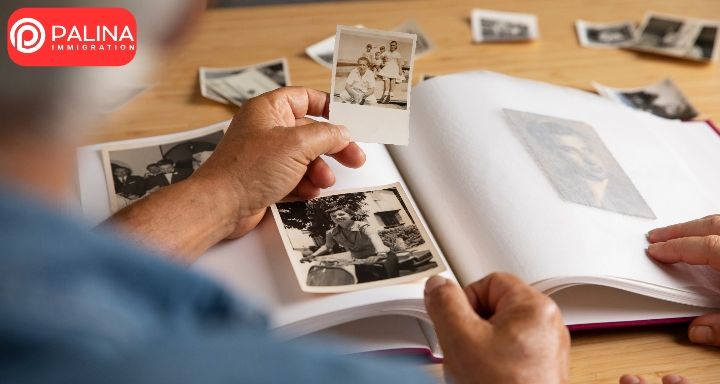
Can Estranged Relatives Pass Down Canadian Citizenship?
Recent updates to Canadian nationality regulations have created opportunities for individuals to claim citizenship by descent. However, many potential applicants face a complex challenge: the key parent or grandparent through whom the claim passes is an individual with whom they no longer maintain communication.
Family relationships may break down for various reasons. Years might have passed since an applicant last spoke with a parent, or personal disputes may have severed ties with an entire branch of the family tree. In other situations, key ancestors may have passed away, taking vital knowledge regarding their ancestral roots with them.
A broken family connection does not invalidate a legal claim to citizenship. Individuals who meet the legal criteria outlined under Bill C-3 may already hold Canadian citizenship status. The primary difference lies in the strategy required to present valid proof to Immigration, Refugees and Citizenship Canada (IRCC), the federal body overseeing citizenship applications.
When preparing an application without the cooperation of a key family member, several important factors must be considered.
Your Relative Does Not Need To Sign Anything
To confirm legal status, an individual submits an official application for a certificate of citizenship using form CIT 0001, along with the required supporting paperwork.
The application form itself requires no input from the ancestral relative. The process does not demand their legal signature, formal consent, or personal assistance during completion.
The true operational challenge rests in securing the administrative documents that confirm the generational line.
Documenting Every Generation
Federal authorities require complete documentation establishing an unbroken lineage back to the qualifying Canadian ancestor. Every intermediate generation must be accounted for using official birth records.
These birth certificates must explicitly list the parents’ full names, as parentage links form the core evidence connecting each generation. Long-form birth certificates typically include these details, whereas abbreviated versions frequently omit parental names.
All submitted documents must originate directly from the original issuing authority. Within Canada, this means obtaining paperwork directly from provincial or territorial vital statistics offices, civil registries, or official archives.
When direct communication with a relative is impossible, four primary methods exist to locate necessary paperwork:
1. Ask The Vital Statistics Office What It Will Accept
If a claim relies on a parent or grandparent born within the past century, research should start at the vital statistics office in the province or territory of birth.
An ongoing family estrangement can create procedural hurdles here. Birth records for living individuals are protected by strict privacy laws, limiting who can request them. While many jurisdictions allow parents to request certificates for their minor children, adult children do not always enjoy reciprocal rights regarding a parent’s record.
Even where state laws permit such requests, applicants may need to demonstrate a legitimate interest or show proof of legal authority. Because regulations vary by province, contacting the relevant registry to confirm acceptable documentation is recommended prior to placing an order.
When an ancestor is deceased, access restrictions generally loosen. Many provincial registries allow direct descendants, such as children, to order records for deceased parents. Applicants must provide full names, birth dates, and birth locations. Obtaining a formal death certificate can assist this step, as it verifies the death while often listing birth details and parentage.
2. Check With Other Relatives On The Same Canadian Line
The estranged relative may not be the sole custodian of needed paperwork. Siblings, aunts, uncles, or cousins sharing the same Canadian lineage might already hold certificates or have ordered copies for their own legal applications.
Connecting with a cousin who has already navigated the process can save significant time. Even if they cannot share original papers, they may provide precise details, such as exact dates, parish names, or registration numbers, to streamline official record requests.
3. Search The Provincial Archives For Older Records
After a birth record reaches a specified age, provincial authorities transfer the file to public archives. At this stage, records become part of the public domain for genealogical research, bypassing strict privacy limits.
Age thresholds for archival transfers differ by province. For example, in Quebec, vital records older than roughly one hundred years are routinely transferred to public historical archives.
Many provincial archives maintain searchable online databases. Applicants can also contact archival staff directly via telephone or email to request help locating specific historical registrations.
4. Document Every Attempt, And Use Secondary Sources To Back You Up
Genealogical databases, census enumerations, church registers, and historical family trees can help establish missing names, dates, and locations.
When an official birth certificate remains unobtainable, IRCC may accept secondary evidence, such as baptismal logs or hospital birth statements, provided they are issued by the original authority.
However, secondary documentation holds weight only when paired with clear proof that exhaustive efforts were made to acquire primary records.
Applicants must maintain a paper trail documenting all attempts, including email exchanges with registry offices, formal rejection notices, and official letters confirming that no record was found. IRCC requires a detailed written explanation regarding any missing primary documents, and reviewing officers assess whether the overall file provides sufficient proof.
What If The Relative Has Died?
Ordering a parent’s birth record is often simpler if the parent is deceased. Privacy protections regarding deceased individuals are generally less restrictive, making direct descendants eligible to apply.
Applicants still need adequate identifying information to locate the record, including the ancestor’s full name, date of birth, and place of birth. Obtaining a death certificate remains a helpful preliminary step, as it confirms the death and often records birth locations along with parental details.
Complex cases involving family estrangement, legal adoption, or missing administrative documents may require specialized guidance. Individuals facing difficult documentation scenarios may benefit from consulting an authorized legal representative.
Palina Immigration Consultancy, a Canadian immigration leader, promises excellence and tailored pathways for your Canadian journey. Get in touch with us at Palinaimmigration.com.




Leave a Reply